
Key Takeaways
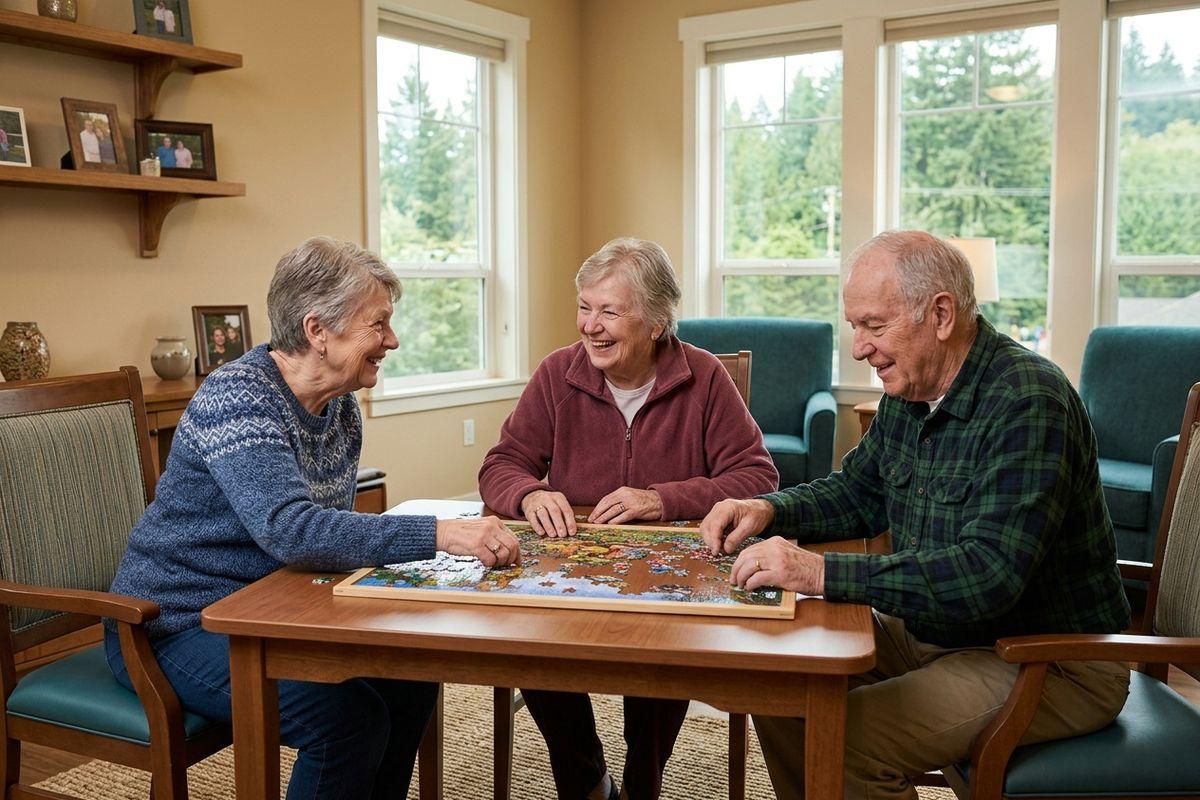
- Group activities help ease loneliness and build a real sense of belonging without pressure
- Shared games and conversation can help keep the mind active and language skills sharp
- Familiar routines lower anxiety and help build everyday confidence to encourage participation
- Music, movement, shared meals, and moments side-by-side spark friendships naturally
- Our team at Issaquah Memory Care shapes activities around each person’s interests and stage
Why Social Connection Eases Life in Memory Care
Watching a parent pull away from the world hurts. Our team at Issaquah Memory Care hears this worry often, and it deserves a real answer. You see them spend more time alone, and you worry about growing social isolation that makes the days feel long and empty.
Group activities can give your parent steady human connection, which leads to less loneliness, calmer days, and a stronger sense of belonging in their community.
Memory care offers the most meaningful benefits when it feels social, warm, and full of small daily moments worth showing up for.
How Group Activities Support the Brain and Mood
Time spent with others does more than fill the calendar. It can keep the mind actively working while lifting the spirit.
Mental Stimulation Through Shared Play
A simple round of trivia or a matching card game gives the brain a friendly workout. Word games pull out nostalgic recollections and keep thinking flexible. Your parent can solve a clue, laugh at a wrong guess, and feel sharp again.
Conversation matters just as much. Talking with others keeps language skills active and supports the kind of cognitive health that helps your parent feel engaged. Each chat at the table is quiet practice that keeps words flowing.
Emotional Lift from Familiar Routines
Predictable schedules can ease the confusion that dementia can bring. When your parent knows music comes after breakfast, the day can feel safe instead of uncertain. That reliable rhythm settles nerves and softens hard mornings.
Repetition builds confidence too. Doing the same gentle activity each week turns something new into something your parent knows by heart. That comfort shows up as fewer anxious moments and more easy smiles.
Group Activities That Build Real Friendships
Friendships grow from shared moments. Engaging, adaptable activities can give people in Alzheimer’s disease care and Parkinson’s care in Issaquah natural ways to connect.
Creative and Music Programs
Painting, crafts, and sing-alongs invite everyone to join at their own pace. There is no wrong way to swirl color on a canvas or hum along to an old favorite. People bond over the shared joy of making something.
Music reaches deep. A familiar tune can spark a deep connection and bring back a piece of who your parent has always been. You might see a foot tap or a smile that says they are right there in the moment.
Gentle Movement Together
Chair yoga, walking groups, and tai chi help keep the body moving without strain. Slow, guided low-impact movement supports balance and helps your parent feel steady on their feet. The benefit goes beyond the physical.
Moving as a group folds connection into every session. Your parent stretches next to a friend, shares a laugh, and builds balance and friendship in one activity. That mix makes the time feel like fun, not exercise.

Shared Meals and Everyday Tasks
Restaurant-style dining turns mealtime into a social hour. People gather around the table, pass dishes, and trade stories over good food. Conversation flows easily when everyone shares the same warm space.
Simple tasks bring people together too. Many enjoy these hands-on moments:
- Setting the table before a meal
- Tending plants in the gardens or greenhouse
- Folding napkins or sorting small items
- Watering flowers in the courtyard
These everyday jobs give your parent a comforting sense of purpose and a reason to work side by side with others.
How Activities Adapt to Each Person and Stage
Dementia changes over time, so activities change too. Memory care meets your parent where they are today, no matter which stage of dementia they face. That flexibility keeps every day meaningful.
- Early stage brings discussion groups and book circles that keep conversation lively and minds engaged
- Middle stage calls for shorter, sensory-based sessions that hold attention without overwhelm
- Late stage offers music, gentle touch, and pet visits for comfort and connection through the senses
A step-by-step approach, shaped around the way Alzheimer’s progresses, means your parent can always have a way to take part. No one gets left out as needs shift.
How Our Team at Issaquah Memory Care Sparks Connection
Some people hesitate to join at first, and that is completely normal. Our team uses a gentle approach, inviting your loved one in without pressure. A warm welcome and a familiar face often turn a quiet observer into an eager participant.
Programming starts with what your parent loves. Our team learns their interests, from gardening to old show tunes, and builds activities around them. Family involvement keeps those connections strong, so you stay part of the picture every step of the way.
When you’re ready to see how group activities and our personalized care can brighten your parent’s days, come visit our community. Book a tour of Issaquah Memory Care today and watch connection happen up close.